Quando as pessoas começam a pesquisar sobre máquinas CNC de 5 eixos, geralmente presumem que todas são iguais.
Mas, ao começar a comparar os modelos, você rapidamente percebe grandes diferenças — em preço, estrutura, tamanho e desempenho.
Algumas máquinas são projetadas para peças de moldes pequenas e de alta precisão.
Outros são construídos para grandes componentes aeroespaciais.
Embora todos afirmem ser "de 5 eixos", suas capacidades reais podem variar significativamente.
Então, o que os torna diferentes?
A resposta está na configuração da máquina.
Diferentes tipos de máquinas CNC de 5 eixos afetam a estabilidade da usinagem, a capacidade de tamanho da peça, o acabamento da superfície e a eficiência geral da produção.
Nem todas as máquinas de 5 eixos são estruturadas da mesma forma, e compreender essas diferenças é essencial antes de investir.
Neste artigo, apresentaremos os principais tipos de máquinas CNC de 5 eixos e explicaremos como cada configuração impacta o desempenho de usinagem no mundo real.
Uma máquina CNC de 5 eixos é um centro de usinagem avançado que pode mover uma ferramenta de corte ou peça de trabalho ao longo de cinco eixos diferentes.
Inclui:
Três eixos lineares: X, Y e Z
Dois eixos rotativos: normalmente A, B ou C.
Os eixos rotativos adicionais permitem que a ferramenta se aproxime da peça de trabalho a partir de múltiplos ângulos sem precisar reposicioná-la.
Em termos práticos, isso significa que a máquina pode usinar geometrias complexas, cavidades profundas e superfícies curvas em uma única configuração.
Em uma máquina tradicional de 3 eixos, a ferramenta de corte move-se apenas para cima/baixo, esquerda/direita e para frente/para trás. Para usinar vários lados, o operador precisa soltar e reposicionar a peça.
Uma máquina CNC de 5 eixos elimina essa limitação.
Ao adicionar movimento rotacional, a máquina pode:
Incline a mesa de trabalho
Gire a cabeça do fuso.
Ou combine os dois movimentos.
Isso permite a usinagem simultânea em múltiplas superfícies, mantendo uma única fixação.
Em comparação com a usinagem de 3 eixos, os sistemas de 5 eixos oferecem:
Maior eficiência de usinagem
Precisão geométrica aprimorada
Melhor acabamento superficial em peças complexas
Tempo de configuração reduzido
Menor erro de posicionamento cumulativo
Para setores como o aeroespacial, de moldes e matrizes, de componentes médicos e de engenharia de alta precisão, a capacidade de 5 eixos é frequentemente essencial, e não opcional.
Embora todas as máquinas CNC de 5 eixos ofereçam capacidade de usinagem multidirecional, sua configuração estrutural influencia significativamente o desempenho, a gama de tamanhos de peças e a adequação ao setor.
A seguir, apresentamos os principais tipos de máquinas CNC de 5 eixos e como elas são normalmente utilizadas em ambientes de produção reais.
Descrição
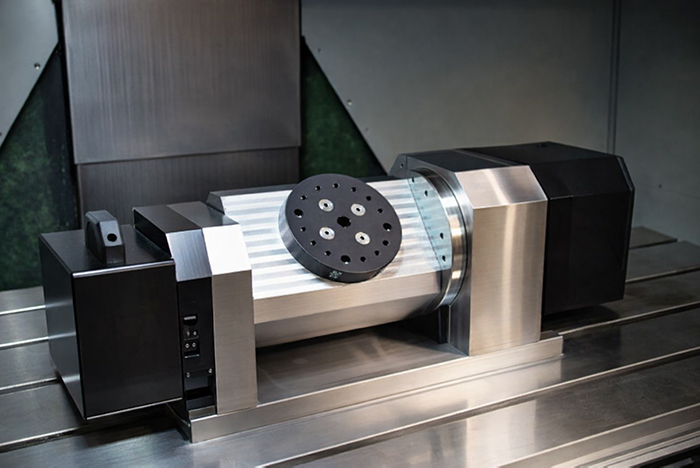
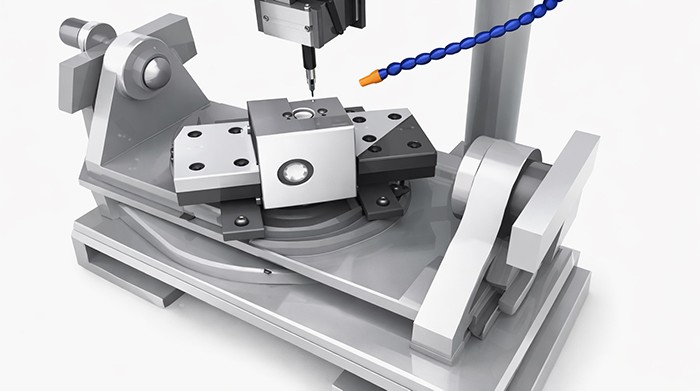
A máquina CNC de 5 eixos tipo munhão Integra ambos os eixos rotativos na mesa de trabalho. A mesa inclina e gira, enquanto o fuso permanece fixo na vertical. Essa estrutura cria uma plataforma de usinagem compacta e rígida, especialmente adequada para trabalhos de contorno de alta precisão.
Indústrias típicas
Este tipo de torno é amplamente utilizado na fabricação de moldes e matrizes, na produção de dispositivos médicos e na usinagem de pequenos componentes aeroespaciais. Em oficinas de moldes, os tornos com eixo de rotação fixa são valorizados por sua estabilidade durante o acabamento em alta velocidade. Na área médica, são frequentemente utilizados para usinar geometrias complexas de implantes, onde a precisão e a qualidade da superfície são cruciais. Fornecedores aeroespaciais podem utilizá-los para suportes estruturais menores ou componentes de alumínio de precisão.
Peças adequadas
As máquinas de torno com eixo fixo são ideais para peças como moldes de injeção, moldes de fundição sob pressão, implantes ortopédicos, pequenas pás de turbina e carcaças complexas de alumínio. Essas peças normalmente exigem usinagem multisuperfície, tolerâncias rigorosas e acabamentos superficiais finos em um espaço de trabalho compacto.
Benefícios
Excelente rigidez estrutural
Alta precisão de usinagem de contornos
Formato compacto
Usinagem eficiente de múltiplas superfícies
Desvantagens
Capacidade limitada de tamanho da peça de trabalho
Carga da mesa limitada em comparação com sistemas do tipo cabeçote.
Descrição
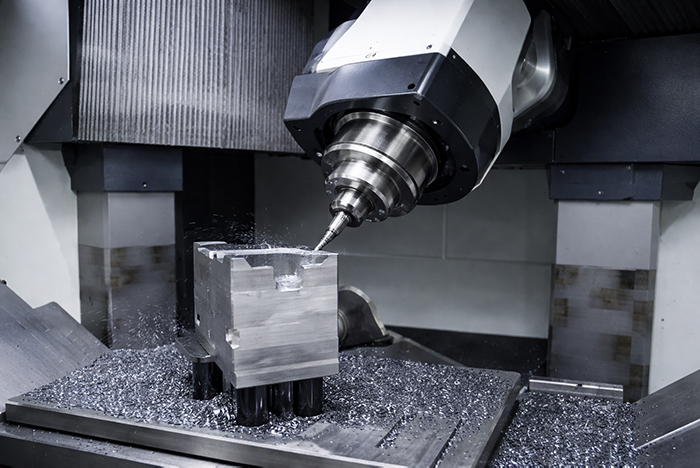
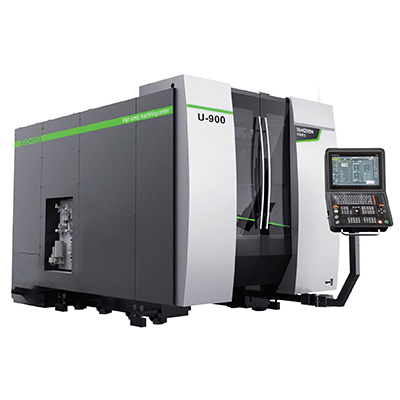
Em uma configuração cabeçote/cabeçote, ambos os eixos rotativos são integrados ao cabeçote do fuso, em vez da mesa. A mesa de trabalho permanece fixa enquanto o fuso inclina e gira para se aproximar da peça de trabalho a partir de múltiplos ângulos.
Essa estrutura é particularmente vantajosa na usinagem de peças grandes ou pesadas.
Indústrias típicas
As máquinas de 5 eixos com cabeçote fixo são comuns nas indústrias aeroespacial, automotiva, de fabricação de estruturas, de defesa e de produção de equipamentos para o setor de energia. Os fabricantes aeroespaciais as utilizam para usinar estruturas de alumínio, componentes de titânio e peças complexas que suportam cargas. Os fornecedores automotivos dependem delas para moldes de grandes dimensões e carcaças estruturais.
Peças adequadas
Essas máquinas são ideais para componentes estruturais de aeronaves, carcaças de motores, caixas de transmissão, grandes estruturas de alumínio e suportes complexos de titânio para o setor aeroespacial. Como a mesa não gira, peças mais pesadas podem ser usinadas com mais segurança e eficiência.
Benefícios
Adequado para componentes grandes e pesados.
Acesso flexível a ferramentas com geometrias complexas
Sem limite de carga na mesa giratória
Desvantagens
Estrutura mecânica mais complexa
Investimento maior em equipamentos
Considerações adicionais sobre manutenção
Descrição
A configuração mesa/mesa posiciona ambos os eixos rotativos dentro do sistema de mesa, enquanto a cabeça do fuso permanece fixa. Este projeto prioriza a precisão de posicionamento e o desempenho estrutural equilibrado.
Oferece um ambiente de usinagem estável para componentes de precisão de tamanho médio.
Indústrias típicas
Este tipo de ferramenta é comumente utilizado em indústrias de engenharia de precisão, fabricação de ferramentas e dispositivos de fixação, produção de equipamentos médicos e usinagem de componentes eletrônicos. É especialmente valorizado em situações onde a repetibilidade e a precisão geométrica são críticas em longos períodos de produção.
Peças adequadas
As aplicações típicas incluem carcaças de precisão, dispositivos de fixação de ferramentas, suportes de alta precisão, componentes mecânicos complexos e peças estruturais de tamanho médio que requerem usinagem multiangular. Essas peças geralmente exigem precisão dimensional consistente e controle de contorno estável.
Benefícios
Alta precisão de posicionamento
Estrutura estável e equilibrada
Repetibilidade confiável
Desvantagens
Limitação de tamanho médio da peça de trabalho
O sistema rotativo requer calibração precisa.
Descrição
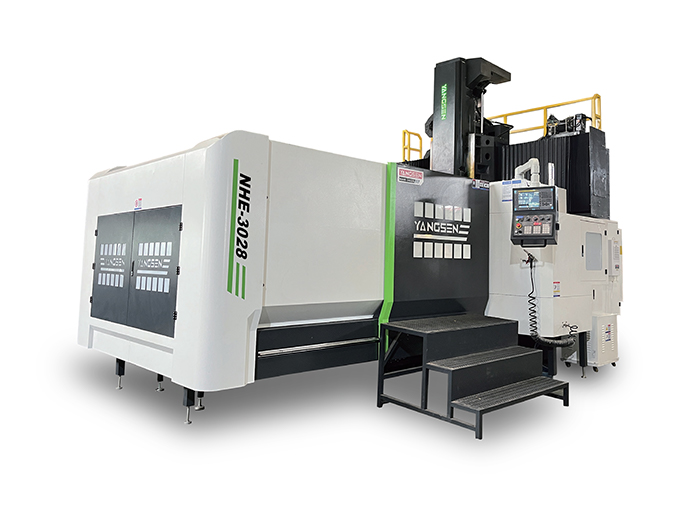
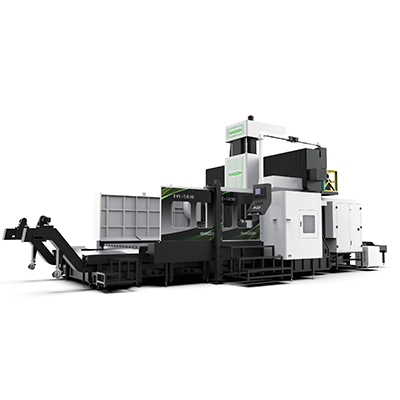
A máquina CNC de pórtico de 5 eixos Apresenta uma estrutura de pórtico projetada para usinagem em grande escala. Frequentemente combina um sistema de pórtico com uma configuração de cabeçote giratório, permitindo a usinagem de peças de grandes dimensões.
Este tipo enfatiza a rigidez e o desempenho robusto.
Indústrias típicas
As máquinas pórtico de 5 eixos são amplamente utilizadas na fabricação aeroespacial, produção de equipamentos para energia eólica, construção naval, transporte ferroviário e indústrias de máquinas pesadas. Elas são particularmente adequadas para setores que exigem usinagem de grandes componentes estruturais com alta estabilidade dimensional.
Peças adequadas
As peças típicas incluem estruturas de asas de aeronaves, cubos de turbinas eólicas, moldes de grande porte, componentes navais, estruturas de aço pesadas e grandes estruturas de ferramentas compostas. Esses componentes geralmente excedem a capacidade dos centros de usinagem padrão e exigem uma plataforma estável de grande formato.
Benefícios
Rigidez extremamente alta
Adequado para componentes ultragrandes
Capacidade robusta de usinagem para trabalhos pesados
Desvantagens
Grande área de instalação
Requisitos de infraestrutura mais elevados
Custo de investimento significativo
Quais são os principais tipos de máquinas CNC de 5 eixos?
Os principais tipos incluem máquinas de 5 eixos com eixo fixo (com munhão), com cabeçote fixo (cabeçote giratório), com mesa fixa (mesa fixa) e com pórtico. A diferença reside na localização dos dois eixos rotativos — na mesa, no cabeçote do fuso ou na estrutura do pórtico. Essa variação estrutural afeta a rigidez, a capacidade de usinagem em termos de tamanho da peça e a flexibilidade geral da usinagem.
Qual o melhor tipo de máquina CNC de 5 eixos para fabricação de moldes?
As máquinas do tipo munhão são geralmente preferidas para a fabricação de moldes, pois oferecem alta rigidez e excelente controle de contorno em um espaço de trabalho compacto. Para moldes muito grandes, no entanto, uma máquina de pórtico de 5 eixos pode ser mais adequada devido ao seu curso estendido e estabilidade estrutural.
As máquinas de 5 eixos com cabeçote são mais adequadas para peças aeroespaciais de grande porte?
Sim, as configurações cabeçote/cabeçote são frequentemente usadas na indústria aeroespacial porque a mesa de trabalho permanece fixa, permitindo a usinagem de peças maiores e mais pesadas sem limitações de carga rotacional. Essa estrutura é especialmente útil para fuselagens de aeronaves, componentes de motores e peças estruturais de alumínio ou titânio.
Qual a diferença entre usinagem simultânea de 5 eixos e usinagem 3+2?
A usinagem simultânea de 5 eixos permite que todos os cinco eixos se movam ao mesmo tempo, possibilitando a usinagem de contornos suaves e acabamentos superficiais superiores. Em contraste, a usinagem 3+2 (também chamada de usinagem indexada) trava os eixos rotativos em posição enquanto o corte é realizado com três eixos. A usinagem simultânea é mais adequada para superfícies complexas, enquanto a usinagem 3+2 costuma ser suficiente para usinagem multifacetada a um custo menor.
Quanto custa uma máquina CNC de 5 eixos?
O preço varia significativamente dependendo do tipo de máquina, tamanho do curso, sistema de controle e rigidez estrutural. Os modelos compactos com eixo de mancal geralmente exigem um investimento menor em comparação com as grandes máquinas aeroespaciais do tipo pórtico ou cabeçote. Além do preço de compra, os compradores devem considerar o espaço de instalação, os sistemas de ferramentas e os custos de manutenção a longo prazo.
Como escolher a configuração de 5 eixos ideal para minha produção?
A escolha depende de diversos fatores, incluindo o tamanho da peça, o tipo de material, a precisão exigida e o volume de produção. Componentes de precisão pequenos geralmente se beneficiam de projetos com eixos de mancais fixos, enquanto peças estruturais grandes podem exigir sistemas com cabeçote fixo ou pórtico. A adequação da estrutura da máquina aos requisitos da aplicação é mais importante do que simplesmente comparar especificações.
Embora todas as máquinas CNC de 5 eixos compartilhem o mesmo conceito básico, suas configurações estruturais criam características de usinagem muito diferentes.
A localização dos eixos rotativos — seja na mesa, no cabeçote do fuso ou dentro de um sistema de pórtico — influencia diretamente a rigidez, a capacidade de tamanho da peça de trabalho, a flexibilidade de usinagem e a estabilidade a longo prazo.
Os projetos com eixo trunnion são frequentemente preferidos para componentes compactos e de alta precisão.
Os sistemas do tipo cabeçote são mais adequados para peças estruturais grandes e pesadas.
As configurações de mesa/mesa priorizam a precisão do posicionamento e o equilíbrio.
As máquinas de pórtico suportam aplicações de grande porte e alta resistência.
Não existe uma única máquina CNC de 5 eixos "melhor".
Cada tipo é projetado para atender a um ambiente de produção e objetivo de usinagem específicos.
Compreender essas diferenças estruturais torna a seleção de máquinas mais clara e estratégica, especialmente para fabricantes que planejam investimentos de longo prazo e crescimento da produção.
Dedicar tempo para avaliar a configuração, o tamanho das peças e os requisitos da aplicação sempre levará a decisões mais seguras.