Na usinagem CNC, a troca lenta de ferramentas pode reduzir seriamente a eficiência da produção.
Se sua máquina para frequentemente para troca de ferramentas, os tempos de ciclo aumentam, a eficiência da usinagem diminui e a produção automatizada se torna difícil — especialmente ao usinar peças complexas que exigem várias ferramentas.
É por isso que os trocadores automáticos de ferramentas (ATC) são tão importantes nas máquinas CNC modernas.
No entanto, diferentes tipos de trocadores automáticos de ferramentas oferecem diferentes vantagens. Alguns se concentram em Trocas de ferramentas mais rápidas, alguns fornecem maior capacidade de ferramentas, enquanto outros são projetados para máquinas compactas ou usinagem pesada.
Compreender as diferenças entre os tipos de ATC pode ajudá-lo a escolher uma máquina CNC mais adequada às suas necessidades de produção.
Um trocador automático de ferramentas (ATC, na sigla em inglês) é um sistema utilizado em máquinas CNC para trocar as ferramentas de corte automaticamente durante a usinagem, sem intervenção manual.
Quando um programa de usinagem exige uma ferramenta diferente para furar, fresar, rosquear ou mandrilar, o trocador automático de ferramentas (ATC) remove rapidamente a ferramenta atual e carrega a próxima no fuso. Isso permite que a máquina continue a usinagem sem interromper a produção.
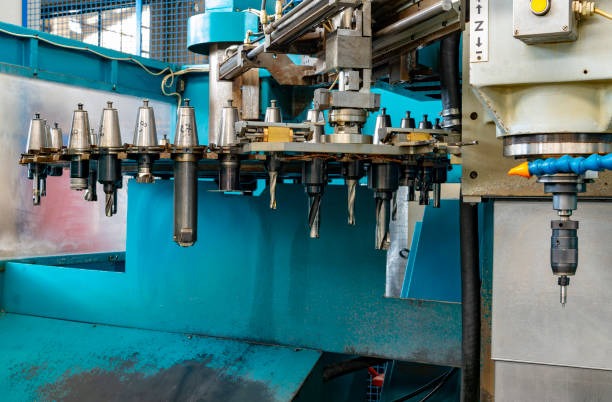
Um trocador automático de ferramentas típico geralmente inclui:
Em comparação com a troca manual de ferramentas, um sistema ATC (trocador automático de ferramentas) ajuda a:
Atualmente, os trocadores automáticos de ferramentas são amplamente utilizados em centros de usinagem verticais, centros de usinagem horizontais, centros de usinagem tipo pórtico e Máquinas CNC de 5 eixos, especialmente para peças que exigem múltiplas operações de usinagem em uma única configuração.
Diferentes máquinas CNC utilizam diferentes sistemas de troca automática de ferramentas, dependendo dos requisitos de usinagem, da quantidade de ferramentas, da eficiência de produção e da estrutura da máquina. Abaixo estão os tipos mais comuns de trocadores automáticos de ferramentas utilizados em centros de usinagem CNC.
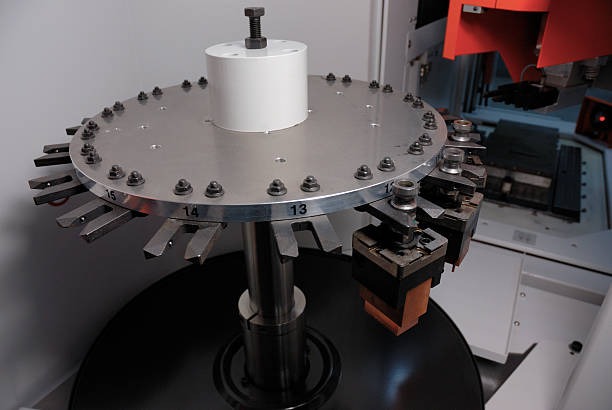
O trocador automático de ferramentas tipo guarda-chuva é comumente usado em pequenas e médias empresas. centros de usinagem vertical.
As ferramentas são dispostas verticalmente em um magazine circular, e o fuso se move diretamente para a posição da ferramenta durante a troca de ferramentas.
Vantagens:
Limitações:
Aplicações comuns:
O trocador automático de ferramentas (ATC) do tipo braço utiliza um braço mecânico para trocar as ferramentas entre o fuso e o magazine de ferramentas automaticamente.
Este é um dos sistemas ATC mais comuns usados em centros de usinagem CNC de alta velocidade.
Vantagens:
Limitações:
Aplicações comuns:
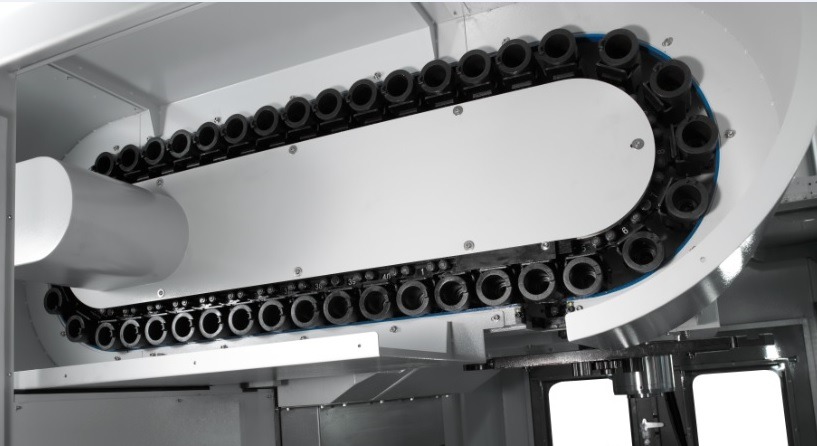
O trocador automático de ferramentas tipo corrente utiliza um magazine de ferramentas acionado por corrente com grande capacidade de armazenamento de ferramentas.
Esse projeto é comumente usado em grandes máquinas CNC que exigem muitas ferramentas durante a usinagem.
Vantagens:
Limitações:
Aplicações comuns:
O trocador automático de ferramentas (ATC) do tipo carrossel utiliza um magazine de ferramentas circular rotativo montado ao lado ou acima do fuso.
É amplamente utilizado em centros de usinagem CNC de médio porte.
Vantagens:
Limitações:
Aplicações comuns:
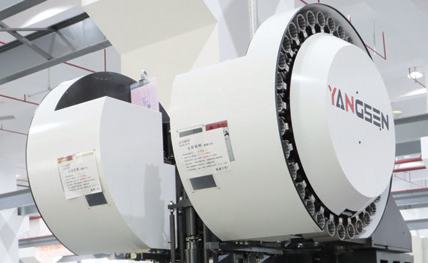
O ATC do tipo tambor armazena ferramentas em torno de uma estrutura de tambor rotativa.
Este tipo foi projetado para máquinas compactas que exigem posicionamento de ferramentas relativamente rápido.
Vantagens:
Limitações:
Aplicações comuns:
O trocador automático de ferramentas do tipo linear organiza as ferramentas em uma cremalheira em linha reta, em vez de um magazine circular.
Este tipo é geralmente utilizado em máquinas CNC personalizadas ou sistemas de usinagem especiais.
Vantagens:
Limitações:
Aplicações comuns:
Os diferentes tipos de trocadores automáticos de ferramentas oferecem vantagens distintas em termos de velocidade de troca de ferramentas, capacidade de ferramentas, tamanho da máquina e aplicações de usinagem. A escolha do trocador automático de ferramentas adequado depende das suas necessidades de produção e do ambiente de usinagem.
Tipo ATC | Velocidade de troca de ferramentas | Capacidade da ferramenta | Espaço de Máquinas | Custo | Ideal para |
Guarda-chuva tipo ATC | Lento | Baixo | Compactar | Baixo | Centros de usinagem vertical de pequeno porte e usinagem leve |
Tipo de braço ATC | Muito rápido | Médio a Alto | Médio | Mais alto | Usinagem automatizada e de alta velocidade |
Tipo de corrente ATC | Rápido | Muito alto | Grande | Alto | Usinagem complexa e grandes máquinas CNC |
Tipo de carrossel ATC | Médio | Médio | Compactar | Médio | Usinagem CNC geral |
Tambor tipo ATC | De velocidade média a rápida | Médio | Compactar | Médio | Centros de usinagem compactos |
ATC tipo linear | Lento | Médio | Comprimento de instalação maior | Médio | Sistemas CNC personalizados |
Se a prioridade for a eficiência da produção, os sistemas ATC do tipo braço geralmente são os mais rápidos, pois podem trocar ferramentas rapidamente com um braço mecânico.
Os trocadores automáticos de ferramentas (ATCs) do tipo guarda-chuva e linear são mais lentos, o que os torna mais adequados para aplicações de usinagem mais leves.
Os trocadores automáticos de ferramentas (ATCs) do tipo corrente oferecem a maior capacidade de armazenamento de ferramentas e são mais adequados para peças complexas que exigem muitas ferramentas de corte.
Os trocadores automáticos de ferramentas (ATCs) do tipo guarda-chuva geralmente têm capacidade de ferramentas limitada e são mais adequados para tarefas de usinagem simples.
Os trocadores automáticos de ferramentas (ATCs) do tipo guarda-chuva, carrossel e tambor são mais compactos e adequados para máquinas com espaço de instalação limitado.
Os ATCs do tipo corrente requerem mais espaço na máquina devido à sua estrutura de magazine maior.
Os ATCs do tipo guarda-chuva são geralmente a opção mais econômica.
Os controladores de tráfego aéreo (ATCs) do tipo braço e do tipo corrente custam mais devido à sua maior velocidade, maior capacidade e estrutura mais complexa.
Não existe um único tipo de trocador automático de ferramentas que seja "o melhor".
Para usinagem compacta e econômica, os trocadores automáticos de ferramentas (ATCs) tipo guarda-chuva ou carrossel são opções comuns.
Para produção em alta velocidade, os ATCs do tipo braço são mais adequados.
Para peças grandes e usinagem complexa, os trocadores automáticos de ferramentas (ATCs) do tipo corrente oferecem maior flexibilidade e capacidade de ferramentas.
O ATC (Centro de Troca Automática) ideal depende das suas necessidades de usinagem, volume de produção e objetivos de automação.
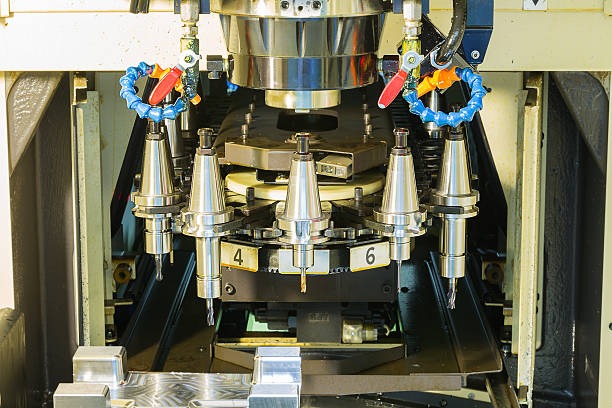
Nem toda máquina CNC precisa de um trocador automático de ferramentas (ATC) grande ou de alta velocidade. O ATC ideal depende de como você usina as peças na produção diária.
Se você processa principalmente peças simples com poucas ferramentas, um sistema ATC compacto geralmente é suficiente. Mas se sua usinagem envolve múltiplas operações, trocas frequentes de ferramentas ou longos ciclos de produção, um ATC de maior capacidade torna-se mais importante.
Ao escolher um sistema ATC, há vários fatores importantes a serem considerados.
Em produções de grande volume, cada segundo gasto na troca de ferramentas afeta a eficiência geral da usinagem.
Sistemas ATC mais rápidos ajudam a reduzir o tempo de ciclo.
Trocas lentas de ferramentas aumentam o tempo ocioso da máquina.
A usinagem de alta velocidade geralmente exige um desempenho mais rápido do trocador automático de ferramentas (ATC).
Os centros de troca automática de equipamentos (ATCs) do tipo braço são comumente usados quando a velocidade de produção é a prioridade.
Diferentes peças requerem diferentes quantidades de ferramentas de corte.
Para usinagem simples, um pequeno magazine de ferramentas pode ser suficiente. No entanto, peças complexas geralmente exigem:
Sistemas ATC maiores ajudam a reduzir a substituição manual de ferramentas e a melhorar a continuidade da usinagem.
Um sistema ATC estável é importante para a precisão da usinagem e para a confiabilidade a longo prazo.
O posicionamento inadequado da ferramenta ou a troca instável de ferramentas podem causar:
Para produção de ciclo longo, a estabilidade do ATC (Câmara de Troca Automática de Ferramentas) costuma ser mais importante do que a velocidade de troca de ferramentas.
Alguns sistemas ATC exigem mais espaço para instalação.
As máquinas compactas geralmente utilizam trocadores automáticos de ferramentas (ATCs) do tipo guarda-chuva ou carrossel, enquanto os centros de usinagem maiores podem suportar sistemas do tipo corrente com maior capacidade de ferramentas.
A estrutura da máquina afeta diretamente o tipo de ATC que pode ser instalado.
Sistemas ATC mais complexos geralmente exigem mais manutenção.
Antes de escolher um ATC, muitos fabricantes também consideram:
Um sistema ATC mais simples pode reduzir o tempo de inatividade para manutenção e a complexidade operacional.
Diferentes setores industriais têm diferentes requisitos de controle de tráfego aéreo.
A usinagem de moldes frequentemente exige trocas de ferramentas mais rápidas.
A usinagem aeroespacial geralmente requer uma capacidade de ferramenta maior.
A usinagem de precisão em geral pode se concentrar mais na relação custo-benefício.
Linhas de produção automatizadas exigem operação estável e de longo ciclo.
Escolher um ATC que corresponda às suas necessidades reais de produção é mais importante do que simplesmente escolher o sistema maior.
Qual é o tipo de trocador automático de ferramentas mais comumente usado?
Os trocadores automáticos de ferramentas (ATCs) do tipo braço e do tipo carrossel são os mais comuns em centros de usinagem CNC. Os ATCs do tipo braço são populares para usinagem de alta velocidade, enquanto os sistemas do tipo carrossel são amplamente utilizados em centros de usinagem vertical em geral devido ao seu equilíbrio entre custo e desempenho.
Qual o tipo de ATC mais adequado para usinagem de alta velocidade?
Os trocadores automáticos de ferramentas (ATCs) do tipo braço são geralmente a melhor opção para usinagem de alta velocidade, pois proporcionam troca de ferramentas mais rápida e reduzem o tempo ocioso. São comumente utilizados em usinagem de moldes, peças aeroespaciais e produção automatizada.
Quantas ferramentas um trocador automático de ferramentas pode armazenar?
A capacidade de ferramentas depende do projeto do trocador automático de ferramentas (ATC). Os ATCs pequenos do tipo guarda-chuva podem comportar de 12 a 24 ferramentas, enquanto os grandes sistemas do tipo corrente podem armazenar mais de 60 ou até mesmo 100 ferramentas para aplicações de usinagem complexas.
Por que as grandes máquinas CNC usam trocadores automáticos de ferramentas (ATCs) do tipo corrente?
As máquinas CNC de grande porte frequentemente usinam peças complexas que exigem muitas ferramentas de corte. Os trocadores automáticos de ferramentas (ATCs) do tipo corrente oferecem maior capacidade de ferramentas e melhor flexibilidade para usinagem de ciclo longo e operações com múltiplos processos.
Quais são as causas de falhas nos trocadores automáticos de ferramentas?
Os problemas mais comuns em sistemas de troca automática de ferramentas (ATC) incluem erros de posicionamento da ferramenta, falha do sensor, lubrificação insuficiente, desgaste de componentes mecânicos e instalação incorreta do porta-ferramentas. A manutenção regular ajuda a melhorar a confiabilidade do ATC e a reduzir o tempo de inatividade da máquina.
Com que frequência um sistema ATC deve passar por manutenção?
Inspeções e manutenções regulares são importantes para o desempenho estável do trocador automático de ferramentas (ATC). Lubrificação, verificação dos sensores, inspeção do porta-ferramentas e limpeza devem ser realizadas periodicamente para reduzir erros na troca de ferramentas e paradas inesperadas.
Um bom trocador automático de ferramentas faz mais do que simplesmente trocar ferramentas — ele afeta diretamente a eficiência da usinagem, o tempo de ciclo e a estabilidade da produção.
Diferentes tipos de trocadores automáticos de ferramentas (ATC) são projetados para diferentes necessidades de usinagem. Escolher o sistema certo pode ajudar a reduzir o tempo de inatividade, melhorar a automação e tornar a usinagem complexa mais eficiente.
Se a sua produção ainda está limitada por trocas de ferramentas lentas ou capacidade insuficiente de ferramentas, o sistema ATC pode ser um dos fatores mais importantes a serem considerados na seleção de uma máquina CNC.